Blog Archive

Saturday, 2 March 2019

EAL - A follow up!

Our previous EAL post, mostly due to the superb examples from Ryan, has proven very popular and as result the viewing figures have triggered a follow up post with some excellent advice from Julie Poole. Let's remind ourselves of the facts first of all:

Julie writes:
At first bilingual children need to understand their new language environment and become familiar with the sounds, rhythms and patterns of English. They do this by watching and listening and then internalising and processing what they have observed. This is sometimes called the silent period. During this time children may take part in classroom activities and communicate by non-verbal means. This processing may take up to 6 months.

It takes about two years to gain near native proficiency in social English. It takes 5 to 7 years to gain near native proficiency in academic English. It is then advised that they follow these steps:

1. Echoing
First attempts will be echoing words or phrases they hear around them. This is one reason why EAL students are placed in higher sets so that they have good models of English.

2. Formula Phrasing
Children will begin to use words, phrases or short sentences for use in a variety of social and classroom situations.

3. Functional Vocabulary
Their repertoire of names and things will be extended. They will also start to use these words to perform different language functions e.g. “Book” may mean “where is my book” or “I have a book,” depending on the context.

4. Basic Sentence Construction 
Children will begin to put together their own sentences of two or three words, usually involving a verb with a subject and/or object.

5. Extended Sentence Construction
Basic sentence construction will be extended through word substitution or the addition of adjectives, prepositional phrases, pronouns and clauses. There will inevitably be errors in the use of plurals, tenses and pronouns, depending upon the structure of the first language.

Once familiarised with the essential info, you may be asking yourselves 'How can we support said students'? Firstly, please see our previous post and the excellent examples shared by Ryan. If you wish to examine other examples of EAL resources used in school, check out the EAL folder on the Shared Resources drive: \\MAN-FILE-001\MAN-TeacherResources$\EAL\Teaching Resources
Within the folder are both practical strategies and worked examples.

In addition, you will hopefully have noted the EMAS shortcut which has recently been re-added to your desktop. EMAS (https://www.emasuk.com/) is a bilignugual EAL resource library, which we at Mangotsfield School have access to. A gentle reminder that the log in details for this are:
Username: mangotsfield
Password: Bristol169

Accessing the Talking Tools
1) Load our website address www.emasuk.com into Google Chrome.
2) Click on the Resources login at the top of the page
3) Enter the above username and password

Please note your password is cAsE Sensitive and must be entered exactly as above.

For any further support, please do contact Julie Poole.

Saturday, 9 February 2019

Driving Questions - Mangotsfield Examples

Embedding a driving question is paramount in Term 4, it can be challenging for the teacher to devise as it requires the ability to make lessons enquiry based and makes creative writers of us all. The DQ should be clear, provocative, open-ended, challenging and linked to the core of what teachers want students to learn. 
Referring back to the DQ frequently throughout the lesson will contextualise activities or provide direction for students will help them to stay on track in more self-directed learning activities.


With this in mind, Mango Moments has been collecting a range of Driving Questions over the past week. Check out the examples below for some inspiration:

English:

What does masculinity look like in Macbeth?
What does isolation look like in a Christmas Carol?
Why does Chaucer make fun of monks?
How does Marlowe make fun of man's pride and insolence?
What makes Macavity such a special cat?
How much does Blake love and fear the tiger?
What makes Martin Luther King such an inspirational speaker?

Humanities:
Why is the coastline creepy?
Are beaches all just sand, sand, sand?
Oops, what happened to my house?
Aid or Trade - which will eliminate poverty?
What has climate change got to do with Somerset?
Why is marriage like a rollercoaster?

PEA:
When does sound become music?

If you have a DQ you are particularly proud of, please do get in touch with your example. The more we share, the more inspiration we may receive!

For further reading:
https://teacherhead.com/2018/06/10/exploring-barak-rosenshines-seminal-principles-of-instruction-why-it-is-the-must-read-for-all-teachers/
https://teach.com/blog/teaching-question-writing/

Supporting Dyslexic Students at Mangotsfield

Maintaining the momentum of supporting our SEND students, in particular those who are double alert (SEND and PP), Mango Moments will be running a series of posts over the coming weeks to raise awareness/reinforce our understanding of key special educational needs and how we can support such students.

Mike Marsh writes:

Although there isn’t a universally agreed definition of Dyslexia the Rose report into the teaching of students with Dyslexia provide a working definition; "Dyslexia is a learning difficulty that primarily affects the skills involved in accurate and fluent word reading and spelling".

Characteristic features of dyslexia are difficulties in phonological awareness, verbal memory and verbal processing speed. Dyslexia occurs across the range of intellectual abilities. It is best thought of as a continuum, not a distinct category, and there are no clear cut-off points. 

Co-occurring difficulties may be seen in aspects of language, motor co-ordination, mental calculation, concentration and personal organisation, but these are not, by themselves, markers of dyslexia.  A good indication of the severity and persistence of dyslexic difficulties can be gained by examining how the individual responds or has responded to well-founded interventions.


So what to do then?


The more we use evidence based teaching strategies such as those outlines in Rosenshine’s Principles (link here) the more effectively we will teach all students including those with Dyslexia. As we move towards use of key words lists and knowledge organisers the we are embedding dyslexia friendly teaching strategies into all of our lessons. There are some specific resources will make a difference; 
  • Visual Prompts- number lines, connectives, sentence starters.
  • Having their own copy of resources especially for text heavy PowerPoint slides. 
  • Using a clear font e.g. 12 point and Tahoma or Lucida Sans.
  • Reduce visual clutter on slides and worksheets, use a light blue/yellow background where possible. 
  • Use of ICT for longer tasks- if you know there is an essay or assessment coming up book a couple of laptops. 
  • Post it notes or whiteboards to record key spellings or the sequence of key events. 
  • Some students swear by coloured overlays, our KS3 literacy coordinator has a supply if needed.
Strategies 
  • Use of talking before writing to allow all students to formulate their ideas verbally before writing them down. 
  • Model active reading- looking for command words, highlighting and reading the questions before the main body of the text. 
  • Prime students that you will be asking them a question, ‘I’m coming to you in two questions time David…’ 
  • For the students who have the most difficulty writing provide flow charts or other graphic organisers as ways for them to get their ideas on paper effectively. 
Further reading:


Sunday, 3 February 2019

EAL Strategies in English

Effective teaching for English as Additional Language students has often focused on making the verbal curriculum more visual, alongside more interactive and collaborative tasks, and with an understanding of the language demands of your own subject. This is particularly important for EAL learners because they provide a classroom experience that has a rich context, additional support, opportunities for collaborative learning and exploratory talk.


Ryan Smith writes:

For the students who are almost completely new to English, my strategy is to design a scaffolded worksheet that is as systematic as possible and divided into sections so it becomes step by step. I'll usually combine a similar variety of activities in similar orders, e.g. finding words in a word search, translating single words from English into their native language, then using the word in a sentence in their native language, then translating that word into English. 

 
An alternative approach includes the same first two steps as above, but turning the words into a picture (if the task / words are perhaps more descriptive in focus). The examples included in this post might help to exemplify it better. The more proficient they become, the more I can try to link what they're doing specifically with what's going on in class.


At the moment, I try to make them as reusable as possible. I think it's useful for the students to get used to a format, but also it's really useful for me so the workload doesn't become completely unmanageable. Most of the worksheets I have for the students whose English is still new can be adapted just by changing the table of words, word search or description.

Student response has been positive; they seem happy that there's something specific to get on with and seem to appreciate the effort. The students I've used it with (Rafaela in Y7, Beatrice & Selin in Y9) always ask for them if I forget to give them out and always work from them, sticking them in afterwards. I have recieved praise and thanks for these students for providing a strategy that allows them to regularly progress, succeed and feel they can access the work.

For further EAL strategies check out the free toolkit linked below, available from the TES website:

Monday, 21 January 2019

Organising Knowledge - the purpose and pedagogy.

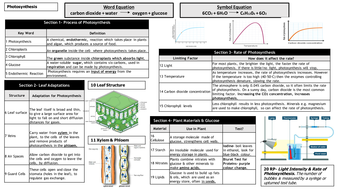
Knowledge Organisers set out the content, vocabulary and context of all knowledge that our students are exposed too. With the demands of new courses, adopting knowledge focused strategies that are purposeful and effective, will have an impact on our students progress.


“Knowing things helps us to connect with previous knowledge and to make connections. Knowing things makes us feel clever. When we take short cuts with knowledge in order to move on to the acquisition of skills, it is like expecting a cook to make a meal with only one ingredient. It takes a range of materials or ingredients to produces something worthwhile”
“The Curriculum : Gallimaufry to Coherence” Mary Myatt (2018)


Following on for our excellent INSET session, delivered superbly by Anne and Caroline, Mango Moments wishes to share examples of effective knowledge organisers as well as some excellent blogs about the value and importance of these tools:

Joe Kirbys Blog:


Journal of the Chartered College of Teaching:

TES Blog:

For any further advice or guidance with constructing your own knowledge organisers, please do not hesitate to ask or make use of the links above.

Saturday, 5 January 2019

I do - We do - You do - Two approaches

When you evaluate the effectiveness of different strategies, we must always recall that explicit techniques often have the greatest impact on memory recall, "I do, We do, You do" does exactly that. It takes students along a structured learning journey where the teacher imparts knowledge, supports students in using it and then encourages growth through independent practice.

In a nutshell, I do is the part of the lesson where you tell students what they need to know or how they need to be able to apply new knowledge. Modelling would be an example of this stage.

We do is the second phase and involves doing tasks together. for example you could support the students in creating a plan to answer an exam question.

You do is the phase of the lesson where you encourage students to practise what you have already taught them by themselves. Such practise helps students to retain what they have learned and to check their level of understanding and mastery.

At Mangotsfield School, this strategy has been utilised effectively by two contrasting departments. Thank you kindly to Kat Merchant and Pete Radmall for their reviews of the approach in their subjects.

Kat writes:
In English, the strategy is about breaking down the elements of language analysis. I do - I use a quote from an extract we have looked at as a class. Then annotate this quote with technique (orange box), inference (red box) and effect linked to language (purple box).
We do - We then use the annotations from the PowerPoint to write a WE paragraph on the board before the students write their own versions. 

You do - For extra challenge students could do multiple interpretations of one quote and/or write a paragraph using the model on a different quote (we had discussed three quotes in the previous lesson so they had notes in their books to be able to do this.)

Impact - I think it helps the students to do a worked example rather than just a pre-written example answer because they get to see me thinking it through and making mistakes. It shows them that it doesn't matter if you go wrong, and that there is a process rather than just a perfect answer that I plucked from somewhere. The colour coding just adds a visual help to the step by step process.

Pete writes:
In Science, the strategy is used by students to review a modelled answer, on this occassion of a scientific method of an experiment they've just done:

We do - They have to count the number of mistakes in the model method.  They then get to bet on how many mistakes there are in the method at the same time pointing out the mistakes, hopefully correcting them as they do so.  The winner gets a house point.  

You do - Discussion from the activity then leads the students to write their own
method for the practical
which is then dot marked and students then respond to the marking.

Impact - Use of a model student answer with deliberate mistakes in as a class activity is very useful for promoting discussion and preparing students for an extended writing task.

If you would like to find out more about the I, We, You strategy then try these links for further reading:

DOT Marking - The approach in Science

We are all aware of the mantra - MARK, PLAN, TEACH (as well as it being the title of a very popular teaching and learning text right now!). The mark element often has the greatest impact when you move away from standard, generalised comments and towards personalised feedback.

DOT marking as a strategy, originated approximately five years ago as part of the EEF toolkit. Effective feedback can move learning forward by as much as eight months in some subjects (and with specific students), however it is one of the five key elements of Assessment for Learning. To quote Dylan Wiliam: "Providing effective feedback is very difficult. Get it wrong, and the students give up, reject the feedback, or choose an easier goal" (2011, p.119).

At Mangotsfield School, John Crozier and the Science department have been personalising their approach to DOT marking to close the feedback loop. Thank you specifically to John for taking the time to outline their strategy for our blog.

John writes:
We have based our dot-marking system on Bloom’s taxonomy.  We are focusing mostly on the skill of “application.” This is so that students can learn to use their science understanding in new ways, to answer more difficult problems and in turn become more independent. 
We are using modelling techniques to introduce students to a simple method for being able to use their science understanding to answer the problem.  We are aiming to increase student independence over time as they get better at the method.

We plan the tasks so that students have the opportunity to develop extended answers, then we use the coloured dot to tell them what level of science skill they have shown in their work.  

All students are then given a structured opportunity to improve their work (DIRT), in line with the skill they have shown.  In other words, the coloured dot also directs them to an improvement task that is appropriate to their achievement.  See attached slides for an example.  Students are given access to the teachers model answer where appropriate, to support their improvement work.


We are trying to encourage a “growth mindset” of aiming high and trying our best to answer difficult problems, and we are proud of the students efforts so far.  It’s still early days, but every teacher is introducing their classes to these tasks, and we are expanding the use of them as the year continues.  We have made a display in every classroom of our colour coding system, and we will be referring to this when students are completing the tasks.

So far we have seen an increase in the quantity of writing for 6 marks questions, and we are also finding that more students are considering the need to structure their answers more carefully.   With repeated practice, students are paying more attention to the teacher’s modelling.  The more able science students are becoming competent at embedding complex ideas to extend their answer, whilst science students who find it difficult are already showing more scientific understanding in their answers.  We expect that students will become more independent and need less modelling over time.  We hope students will learn to feel accomplished and successful when it comes to writing extended answers in science, as they get more practice.

For other ideas on effective feedback, click on the link below to an excellent blog on practical strategies by Harry Fletcher-Wood: